
GM from South Korea
In this article, Aakansha from our team, based in South Korea herself, looks at the country’s crypto market through the lens of retail adoption, exchange-driven trading culture, and the national regulatory framework, the Virtual Asset User Protection Act. Curious about South Korea’s high rate of crypto participation, the dominant role of domestic exchanges, or the phenomenon of the Kimchi Premium? And what about listing pumps? Read on.

In previous editions of GM From, we looked at how the crypto industry is developing in countries including Sweden, Kazakhstan, Kyrgyzstan, Nigeria, Morocco, India, the Netherlands, the United States, and Australia. We explored adoption rates, usage cases, ecosystems and events, and the broader developments shaping the industry in each market. This time, we turn to South Korea. How are South Koreans using crypto? What makes the country one of the world’s most active retail crypto markets despite its strict regulatory environment? And which initiatives, exchanges, and communities are helping build the country’s Web3 ecosystem?
At Thrilld Labs, our team has consisted of people from around the world, coming from countries such as the Netherlands and Italy to South Korea, Russia, the United States, Nigeria, and China too. Fundamentally, we argue that global collaboration is a big part of what Web3 intends: creating an ecosystem that removes traditional barriers to participation thanks to its inherent construction around a decentralized network. However, even with these decentralized beginnings, there remain challenges to everyone having the same opportunities.
Whether it be due to a lack of internet access or devices, an insurmountable knowledge gap, or legal and regulatory limitations, your location and personal situation remain determining factors in Web3. Where you live, and who you are surrounded by, fortunately or unfortunately, can shape your work environment and how easily you can enter or do business in the Web3 space, or any industry, for that matter.
At the same time, we see the global nature of Web3 surfacing in international teams (such as our own :)), in the increasing number of cross-border Web3 companies, and, last but not least, in the many events taking place around the world.
As a global company, and one that actively works with international events, organisations, and partners, we are always curious to learn more about ecosystems and crypto markets in different countries, as well as how national tendencies and intracities are contributing to the industry.
In this edition, we turn to South Korea’s crypto market. Read on to explore the country’s high rates of crypto adoption, its powerful won-based exchange ecosystem, market phenomena such as the Kimchi Premium, and the evolution of its regulatory framework from speculative crackdowns to the Virtual Asset User Protection Act.
We also look at how South Korea is gradually moving beyond retail trading and towards a broader Web3 builder ecosystem through local communities, hackathons, and flagship events such as Korea Blockchain Week.
GM from South Korea
South Korea is one of the world’s most technologically advanced economies, known for its high-speed infrastructure, technological innovation, and digitally connected population. Home to companies like Samsung and LG, technology giants that dominate their respective industries, the country has long been at the forefront of digital adoption. It is, therefore, perhaps unsurprising that South Korea has also emerged as one of the world’s most active cryptocurrency markets.
Since 2017, South Korea has consistently remained among one of the largest crypto markets globally, supported by widespread internet access, a rather strong retail participation, and a tech-savvy population. Today, cryptocurrencies have become a mainstream investment for many South Koreans. According to [more references below this article] data from the Financial Services Commission (FSC), approximately 9.7 million people traded cryptocurrencies on domestic exchanges during the 2nd half of 2024, representing nearly one in five Koreans. Crypto is now widely used as part of personal wealth and investment portfolios rather than niche speculations.
South Korea’s Web3 space is often associated with speculative trading, trading price swings, and market phenomena such as the Kimchi Premium. Yet behind that image lies one of the world’s most sophisticated retail ecosystems: a market with strong domestic exchanges, high won-dominated trading volumes, and a regulatory system that has increasingly prioritised investor protection, surveillance, and compliance instead of outright prohibition.
Crypto in South Korea
South Korea is one of the world’s most retail-driven crypto markets. By 2025, the number of crypto investors has risen to roughly 10.77 million in the first half of the year and reached approximately 11.13 million by the end of 2025. In other words, around one-fifth to one-quarter of the population now has at least some level of exposure to digital assets.
The participation is not evenly distributed. Investors in the 30s cohort represent around 29% of users, while those in their 40s account for another 27%. Younger users under 20 account for 19%, followed by those in their 50s at 18%, and those aged 60 and above at 7%. Overall, this shows that the crypto participation in Korea is spread across working and pre-retirement age groups rather than being limited to younger retail traders only.
The market is also becoming increasingly capitalised. The number of investors active at Korean virtual assets service providers (such as centralised exchanges and custodians) holding more than 10 million won ($6500) rose to 1.21 million in the second half of 2024, while those holding 100 million won nearly doubled over the same period, reaching 220,000. Interestingly, since South Korea uses a real name bank account, linked to the exchange account, these are arguably all unique users.
At the same time, South Korea’s crypto economy continues to remain heavily trading-oriented. Activity is concentrated in Bitcoin and major altcoin spot trading, while institutional participation continues to remain limited by banking restrictions, corporate account barriers, and strict compliance requirements. This is also reflected in the structure of the market itself: while millions of individuals actively trade crypto, only 220 corporate accounts were registered with domestic virtual operators in the first half of 2025. Consequently, retail participants continue to play a rather dominant role in shaping market activity and sentiment.
Unlike many other jurisdictions where crypto activity is fragmented across offshore platforms and largely dominated in U.S. dollars, much of South Korea’s crypto economy is anchored in domestic trading through local exchanges using the Korean won (KRW). As a result, KRW has consistently ranked among the largest fiat currencies by global crypto trading volume. The market is essentially dominated by domestic won-based exchanges, particularly Upbit and Bithumb, with the country’s top five exchanges accounting for almost all local users.
This has produced a rather distinctive crypto economy; one that is highly active, deeply localised, and strongly shaped by the behaviour of ordinary investors rather than by pension funds, corporate treasuries, or large institutional allocators. In this sense, South Korea’s crypto market is defined less by institutional capital formation and more by concentrated retail sentiment, which further helps us understand some of the market’s best-known features, including the Kimchi premium and the outsized influence of local exchange listings.
Kimchi Premium and Korea’s Unique Trading Culture
One of the most widely discussed features of South Korea’s crypto market is the Kimchi Premium: the tendency of cryptocurrencies on Korean exchanges to trade at higher prices than on major global exchanges. In practice, this basically means that assets such as Bitcoin may cost more on platforms like Upbit and Bithumb than on offshore venues such as Binance and Coinbase. According to Kaiko and Presto, the premium is driven by strong domestic demand combined with regulatory and market frictions that make arbitrage difficult. To put simply, Korean crypto prices can often feel “out of sync” with the global markets.
This phenomenon reflects not only the enthusiasm but also the structure of the Korean market itself. Real-name account rules, domestic exchange restrictions, and broader regulatory barriers have historically made it harder to move funds and exploit the price differences between Korean and international platforms. And as a result, price gaps on centralised exchanges can persist for longer than they would have in a more open market. In calmer periods, the kimchi premium has often averaged around 2-3%, but during bullish cycles, it can rise much higher. For instance, during the 2017 crypto boom, it reportedly reached 30-40%, and the most recent spikes of around 14% during especially bullish periods.
The premium has made South Korea an important sentiment indicator during global crypto cycles, as the domestic demand can at times push local prices above international benchmarks.
Another feature of Korea’s trading culture is the listing pump. Kaiko and Presto describe this as the sharp price movement that often follows when a major Korean exchange lists a new token. Because these exchanges provide access to one of the world’s most active retail investor bases, a listing can trigger immediate spikes in both price and trading volume. For smaller and mid-cap projects in particular, a Korean exchange listing can materially increase visibility and liquidity in the short term.
The Exchanges Behind Korea’s Crypto Economy
South Korea’s crypto market is unusually concentrated around a small number of domestic exchanges. The key players are Upbit, Bithumb, Coinone, Korbit, and Gopax, but in reality, the market is dominated by the first two. According to Kaiko and Presto, Upbit and Bithumb together account for roughly 96% of domestic crypto trading volume, giving them a rather central role in shaping liquidity, listings, and retail market sentiment in the country.
This concentration is fascinating because South Korean exchanges do not operate quite like many other offshore competitors . Access to KRW trading pairs depends on a domestic banking relationship and a real-name verified account system, which means users can not simply open anonymous exchange accounts and begin trading. That system was introduced to reduce money laundering and speculative abuse, but it also had the effect of reinforcing the dominance of a handful of licensed local platforms. Over time, this has created a tightly regulated entry structure that directly shapes how users access crypto markets in Korea.

The result is a crypto market that is highly localised and structurally distinct from the offshore exchange ecosystem. Korean exchanges serve as the primary fiat on-ramp for local users, but they also act as gatekeepers to one of the world’s most active retail investor bases.
South Korea’s Regulatory Evolution
As mentioned previously, South Korea’s crypto market is often described as heavily regulated, however, its current framework emerged in stages. The first major turning point came in 2017, when authorities responded to the country’s speculative crypto boom by banning domestic initial coin offerings (ICOs) and increasing scrutiny of exchanges. The government stopped short of banning crypto trading outright, and the message was pretty clear: crypto would not be allowed to grow as an unregulated parallel financial market.
The next major shift came with the real-name trading system, introduced in 2018. This required crypto traders to use verified bank accounts that are linked to their legal identities, making South Korea one of the earliest jurisdictions to build a formal banking-compliance bridge into crypto trading. The revised Act on reporting and using Specified Financial Transaction Information (2021) went further by requiring Virtual Asset Service Providers (VASPs) to register with financial authorities and comply with anti-money laundering obligations, including customer due diligence and the travel rule.
The collapse of Terra/Luna in 2022 was an important political and regulatory catalyst. Terra was closely associated with the Korean founder Do-Kwon, and the implosion intensified domestic pressure for stronger market supervision, especially around token issuance, custody, and exchange conduct. This accelerated the efforts to move beyond anti-money laundering alone and towards a broader framework focused on investor protection and market abuse.
The process ended with the Act on the Protection of Virtual Asset Users enacted in 2024. The law gave regulators a clearer legal basis to supervise exchanges, safeguard customer assets, and punish unfair trading practices such as market manipulation and insider trading. In other words, South Korea’s regulatory approach has evolved from ad hoc containment of speculation into a more formalised model: one that still permits crypto trading, but under increasingly strict compliance and investor-protection rules.
Investor Protection and the VAUP Act
The Virtual Asset User Protection Act (VUAP Act) is the centerpiece of South Korea’s current crypto framework. According to the FSC, the law has three broad goals: protecting users’ assets, prohibiting unfair trading practices, and giving regulators stronger supervisory and sanctioning powers over virtual asset service providers.
At the operational level, the Act requires exchanges to segregate users’ deposits and virtual assets from their own assets, entrust customer cash deposits to banks, and hold a significant share of customer crypto in cold wallets to reduce hacking and custody risk. It also requires exchanges to maintain reserves or insurance arrangements that can help cover losses arising from hacks, system failures, or other operational incidents. Together, these requirements are designed to reduce counterparty risk and strengthen trust in centralised exchanges.
Interestingly, the law also aims to target market abuse. It explicitly prohibits the use of material non-public information, price manipulation, and other unfair trading practices in virtual asset markets, bringing crypto market abuse closer to the treatment of misconduct in traditional financial markets.
Taken together, these provisions arguably show that South Korea’s regulatory strategy is not simply about restricting crypto activity. Rather, it is about allowing the market to exist while forcing it into a much more controlled institutional framework.
Web3 Ecosystems and Conferences
For years, South Korea was viewed primarily as a retail liquidity market, i.e., a place where crypto projects sought listings, trading volume, and visibility among one of the world’s most active investor bases. That role continues to remain, but the market is gradually expanding to encompass a broader Web3 ecosystem. In recent years, major global ecosystems, including Avalanche, TON, Ripple, and Solana, have invested more deliberately in Korean builder communities through grants, hackathons, ecosystem partnerships, and local events. The country’s strong gaming, fintech, and mobile ecosystems provide a natural environment for Web3 development, and as a result, Korean startups and developer communities are hosting and participating in hackathons, local acceleration programs, and other initiatives.
That said, overall, the market is slowly shifting from a retail-driven liquidity hub towards a more balanced ecosystem that includes builders and developers.
South Korea’s growing importance as a builder market is evident in its events and community infrastructure. Korea Blockchain Week (KBW) has become the country’s flagship crypto event, drawing founders, investors, developers and global protocols to Seoul each year. Alongside KBW, events such as BUIDL Asia have positioned themselves more explicitly for long-term ecosystem development in the country.
Beyond the headline conferences, South Korea has also developed a broader network of smaller hackathons, university blockchain clubs, and ecosystem-specific meetups. Communities such as Superteam Korea are helping connect local developers and founders to global blockchain ecosystems, while, from our experiences attending events in Seoul, university groups and independent meetups continue to serve as entry points for students and early-stage builders.
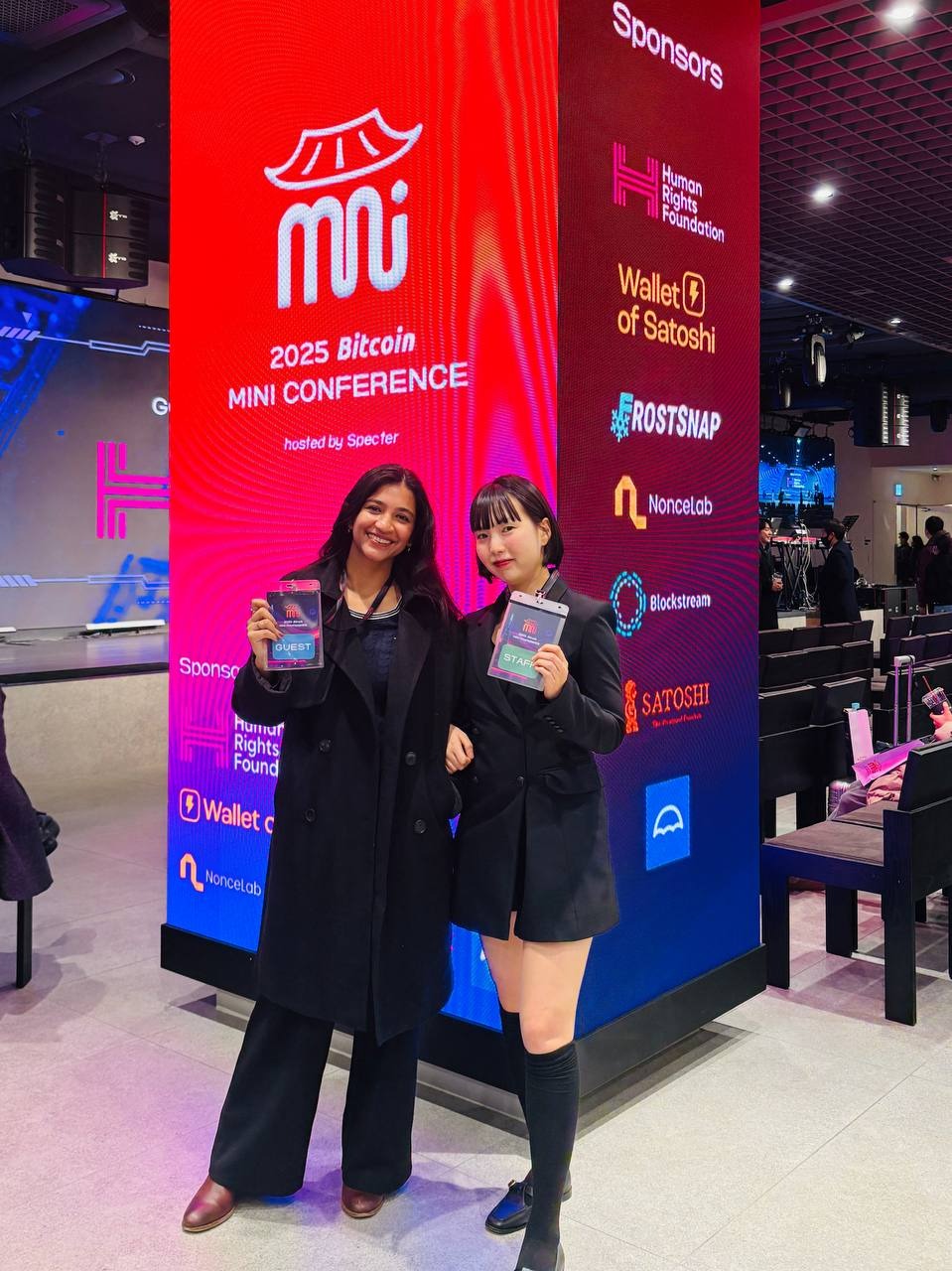
Aakansha Yadav (BD & Research Associate at Thrilld Labs, and writer of this article, left) at the 2025 Bitcoin MINI CONFERENCE in Seoul, South Korea.
Conclusion
South Korea definitely occupies a special position in the crypto landscape. It is both one of the world’s tightest regulated crypto markets as well as one of its most active retail-driven ones. Millions of users trade through domestic exchanges, while uniquely local phenomena such as the Kimchi premium (not to mention prediction markets and e-gaming vs. crypto) make Korea a market that the rest of the industry watches closely.
However, South Korea’s crypto ecosystem is no longer defined by its active retail market alone. Over the past several years, the country has built a more formal regulatory framework around user protection, exchange oversight, and market integrity while also gradually opening the space for a broader Web3 ecosystem to emerge. Hence, global protocols are investing more seriously in Korean builders and communities, and crypto is becoming increasingly normalised as part of mainstream retail investing and wealth management.
Ultimately, for certain jurisdictions in the global industry, South Korea may serve as a case study of how adoption can scale within a strict regulatory environment into a more diversified ecosystem.
The research and data used in this article are up-to-date as of June 2026.
Read more GM From research pieces:
GM from Australia-Thrilld Labs
GM from the Netherlands–Thrilld Labs
GM from Kyrgyzstan–Thrilld Labs
GM from Kazakhstan–Thrilld Labs
Sources
https://cryptorank.io/news/feed/f3a3d-south-korea-crypto-investors-demographics
https://en.yna.co.kr/view/AEN20250520002600320
https://www.mk.co.kr/news/economy/11355694
https://www.tokenpost.com/news/insights/16918
https://www.kaiko.com/resources/the-state-of-the-korean-crypto-market
https://www.prestolabs.io/research/state-of-the-korean-crypto-market
https://www.fsc.go.kr/eng/pr010101/81217
https://en.yna.co.kr/view/AEN20220517003951320
