
From Telescopes to Tokens: How Science Became Decentralised
Traditional Science is seriously confined by a hierarchy of knowledge and resources, which, paradoxically, hamper the originality, creativity, and innovation of research. Enters decentralised science. Via blockchain tech, barriers to and in science are removed, allowing researchers to bring about their own ideas and conceptualizations about the world via a range of tools, from DAOs to IP-NFTs. Read on for a new (research!) article, written by Team Thrilld...

Introduction
There is a story that has been told for centuries, a never-ending tale where each plot unfolds novel discoveries and questions. Science is part of this story of human history, where our inherent inquisitiveness seeks to explain the world to us in ways we can understand, to create a better life and an improved world. It is a systematic body of knowledge acquired through observation and experimentation.
The history of science is highly related to the development and construction of societies, for better or worse. On one end, scientific improvements and changes in methodologies have often led to new conceptualisations of knowledge and life in human history, even to the beginning of humankind! When Thales of Miletus, an ancient Greek philosopher, mapped the eclipse of the sun he was one of the earliest people to do so using what we today consider modern methods of scientific study. Aristotle, in 348 BCE, also took this scientific approach to lay the foundation for many of his ideas, and Ibn al-Halthaim (Alhazen), a native of the Mesopotamia region, used experimentation to discover that light travels in a straight line. We can see that at least these early intellectual thinkers were engaging with the world around them, trying to understand. Experimenting. Hypothesizing.
Scrolling down to the 16th and 17th centuries, we see that many important developments took place in scientific and technological innovation. For example, the first telescope Kijker, was invented by Hans Lippershey 1608, and the first microscope was invented by Hans and Zacharias Janssen in the late 1590s. These technologies allowed humans to expand their own capabilities, for example, to observe the stars, a bacteria, or even a snowflake in significant detail. After all, how could we know what a bacteria or a virus looks like, perhaps even our own human bodies, if not for the microscope? Or, how do we know that there are so many shapes of a snowflake?
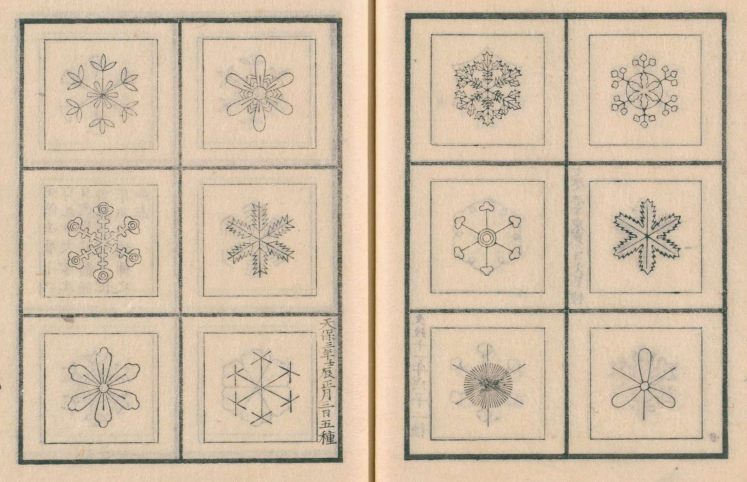
Science through technology is one way that humans have expanded our capacities to create knowledge, explain how nature and the world looks like and works, and ultimately has even shaped our worldviews. Technology as a tool for human to understand the world around us is especially significant for us in the present, when technology is so embedded and entangled with our modern existence and daily lives.
Just as the telescope and microscope expanded our ability to observe the natural world, modern digital technologies are now expanding our ability to conduct, share, and fund scientific research. In this article, we turn to a field that has only recently emerged in the past few years, Decentralised Science (DeSci).
Through this integration of science and technology, technology becomes the method of scientific research. Or more accurately, technology – through blockchain – helps to enable scientific research. While technology in this case may not actually do science in the same way a microscope might, it is still very much an actor and a reflection back on our world. DeSci, along with the “open science movement” arose from the institutional limitations and barriers to the pursuit of “free” scientific research.
Indeed, scientific research and results can be perceived as public goods, but in practice, they are often limited by privatisation, access barriers, and financial constraints. Scientific research should ideally be available and accessible to the public for accountability and transparency because the public often funds research. Therefore, they should be fully informed of how the funds are used. However, over the years, we still see that scientific research has faced continued structural and institutional limitations.
The Hurdles of TradSci: Is Traditional Scientific Research Broken?
We may argue that Traditional Science (TradSci), which represents the conventional method of scientific study, is seriously confined by a hierarchy of knowledge and resources. If not from a lack of funds, it could be from limited collaboration or individualised (and isolated) studies. Even worse, the lack of collaboration can arise from communication barriers, inadequate access to existing research work, or geographical distance. The lack of reproducibility may also arise from unclear documentation of methodologies and results.
Simply put, the system of TradSci is splintered as well as sorely uninviting.
Firstly, there are failures in transparency. Access-related challenges called “paywalls” or institutional structures and government policies are part of the blockade. For example, a researcher’s proposal for funding likely faces long delays before being accepted. These delays may linger for months or years and may still sometimes end up being rejected.
The slow process of research publication from start to finish also retards the growth of research. Reports suggest that it can take about 4-12 months for a paper to be published. The high cost of publication further discourages individuals from sharing their work, as many cannot afford the fees. According to Peeref, Article Processing Charges (APC) for publication range from $1,600 to $4000.
Talk about bias in funding, where the selection of research to be financed is in the hands of only a small number of people. This may explain why some topics, such as certain aspects of women's health, remain underfunded and understudied. And when it comes to accessing scientific work, even if articles are not restricted, they often come with steep prices.
Additionally, individual researchers are often not rewarded for their work except through publication in well-known journals at most. To make discoveries relevant to global problems, these researchers are open to risk and conduct new experiments. However, an article by Finn Strivens notes that risk-taking in scientific research is held back by a lack of recognition, causing scientists to stay away from breaking the mold of conventional research and this is arguably contrary to the basis of science, which should aim to disrupt existing epistemologies and conceptualisations of knowledge.
Instead, the current system of scientific research production, paradoxically, hampers the originality, creativity, and innovation of research.
Enters a new development in the intersection of science and technology. Just as Traditional Finance evolved into Decentralised Finance through Web3 technology, DeSci seeks to improve the conventional means of scientific research using blockchain tools.
What is Decentralised Science and how does it improve scientific research?
The emergence of DeSci not only reflects the faults of the traditional scientific research industry, but it also brings new approaches to how studies are funded, conducted, and published. The word “DeSci,” is, indeed, coined from two words, “decentralisation” and “science”, destructuring the centralization (and monopolization) of scientific funding and resources. DeSci entangles technology with science and society in ways that restructure the existing institutional and processes of knowledge production, and perhaps even the power structures laden in knowledge.
In a practical sense, DeSci improves research and its results in various ways. For one, some applications remove the control and paywalls on scientific studies that are locked behind centralised journals and academic institutions. This means that individuals all over the world would be able to connect and exchange ideas without the boundaries of the institution.
DeSci platforms also reduce access restrictions created by high prices or institutional gatekeeping. They address these problems by providing a decentralised publication platform that encourages open-access for anyone interested in contributing and reading. For instance, ResearchHub allows scientists to publish and discuss research openly (although some may still require basic registration).
Decentralising research efforts, DeSci can also deal with the burden of stalled or unfunded proposals abandoned in stacked silos. Platforms such as Bio Protocol allow medical researchers to apply for funding in a transparent, decentralized way. This process encourages fairness and openness and transparency whilst ideally improving the efficiency of funding decisions.
Interestingly, DeSci also provides new multi-funding methods through on-chain systems such as DAOs (Decentralised Autonomous Organisation) that may deploy funds via the immutable ledger and smart contracts, and hereby manage funds and make decisions on projects in a transparent way, on-chain.
Another noteworthy application is the Intellectual Property Non-Fungible Token (IP-NFT), which offers researchers the chance to claim ownership of their work and receive funding directly from their supporters. By tokenizing intellectual property as NFTs, these assets are stored on the blockchain and can be purchased or invested in by interested parties. A good example is VITADAO’s ARTANBio project, which raised $300,000 through IP-NFTs.
Real-Life Application of DeSci Projects
As we described above, DeSci is clearly a recent and thrilling vertical of Web3, breaking centuries of institutional hoarding and high costs through on-chain and global accessibility. To get a further grasp of what's happening in the market, we are looking into some interesting projects, varying from infrastructure, healthcare, funding, publishing and intellectual property, such as:
VitaDAO might be one of the top and active DeSci projects in longevity science. VitaDAO removed the limitations of access to biomedical research and development. Funds and intellectual property are generated by organization members using VITA tokens. VitaDAO, with up to 4000 members, has invested over $10 million in various projects, making them stand out in decentralised longevity science. Here, researchers are selected and funded by the community through voting.
Molecule is another project that allows individuals to tokenize their IP. Molecule creates a favourable platform where nascent researchers connect with community members and investors. It funds new researchers by allowing them to mint IP-NFTs, yielding shared ownerships, investment opportunities and transparent licensing. Molecule has over 4500 community members with up to 250 projects, plus three bio DAOs (Biotech Decentralized Autonomous Organizations) worth $10M in their network.
AthenaDAO: Owned by the community members, AthenaDAO is targeted to female health research, which, as noted, is often neglected and under-resourced. AthenaDAO, in collaboration with Molecule, has funded emerging studies in endometriosis, fertility and hormonal health.
Bio Protocol is another advanced project overseeing how research is carried out and financed. Powered by YZi Labs, it provides tools to oversee funding and management of scientific IP in research. Bio Protocol also enables individuals to pool and share their funds, potential benefits and risks on projects.
ResearchHub strongly affirms that access to research should not be paywalled. It's a platform that connects researchers with philanthropists and also speeds up funding. ResearchHub raised $5M in June 2023 as engineered by Brian Armstrong, the CEO of Coinbase. ResearchHub compensates individuals for writing and reviewing academic papers. Reports state that $1.2M has been allocated to research funding, while $1M has been earned by reviewers as of January, 2025.
In Conclusion
We have seen the framework of DeSci and how it can disrupt and change scientific research today. Having seen some of the real-life projects, it's evident that the landscape of DeSci has many ways to curb the pitfalls associated with TradSci. Whether it's about organizational paywalls, funding bottlenecks, communication gaps and the steep price of scientific studies articles, DeSci seeks to crack all the puzzles.
Science doesn't have to be a total bore with many angles of research hitched up with obstacles and flops; instead, scientific research should break free from the lab. Yet crucially, the findings and benefits of this research should be made transparent and accessible to spur global and collaborative problem solving (and growth).
To conclude, technology constructs and creates our reality, whether by enabling our visualization and articulation of all the geometric shapes of a snowflake through a microscope, or by expanding knowledge towards more individuals across societies. And, thanks to blockchain technology, barriers to scientific research are effectively removed, allowing researchers to bring their own ideas and conceptualizations into the world – and perhaps even expand our very ways of knowing and seeing it.
About the Authors
Ifeoma Blessing is a graduate of University of Nigeria Nsukka and is intrigued and inspired to build knowledge in blockchain, cryptocurrency and decentralized technologies. She is a Medical Lab Scientist, a skilled content writer and a Web3 enthusiast passionate about simplifying Web3 to relatable and friendly contents.
Kendall Brown is a Business & Growth Associate at Thrilld Labs, a highly skilled content writer and researcher, and an scholarship and award-winning undergraduate at Yonsei University in Seoul, South Korea majoring in Economics and Asian Studies.
Resources
- Democratizing Research: The Rise of Decentralized Science (DeSci) – (molecule, Suyen Espinoza Miranda)
- 5 Decentralized Science (DeSci) Projects Revolutionizing Scientific Research and Development – (Crypto Altruists, Drew Simon)
- Inside DeSci: Sector Overview and 40+ Projects List – (DWF Labs)
- What is Decentralised Science (DeSci) – (The Block, MK Manoylov)
