
EcstaSHE Spotlight: Nupur Bishwas
In this EcstaSHE Spotlight, we spoke with Nupur Bishwas, Head of Partnerships at Proof of Talk, about what really happens behind the scenes of major industry events. From building strategic partnerships and curating the right people in the room to turning conversation into measurable business outcomes, Nupur has developed a practical approach to making events deliver real value. We asked her what most people misunderstand about the event industry, how she evaluates partnerships, what metrics actually matter, and what it takes to stand out as a high-profile event. Read on!
At Thrilld Labs, we believe that the future of our industry is built thanks to connections, expertise, and proactive collaboration, not in the last place amongst female professionals! That’s why we launched EcstaSHE, a business group for female Web3-oriented pros, leaders, and execs. Through the EcstaSHE Spotlight Series, we feature women across our network who build the industry. We ask about their careers and business insights.
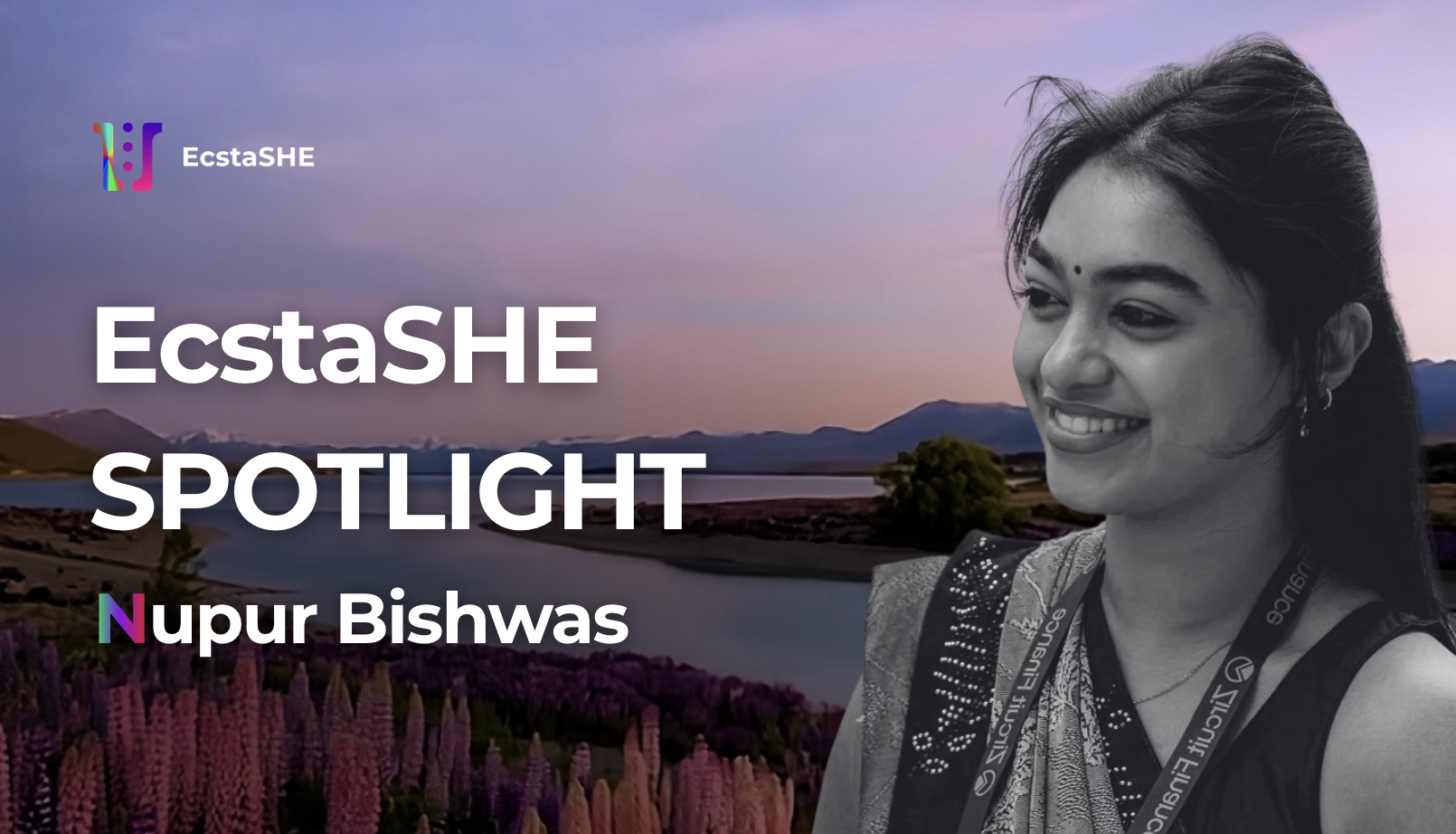
We're thrilld to speak with Nupur Bishwas, Head of Partnerships at Proof of Talk, where she works right in the middle of events, partnerships, business development and relationship building.
Nupur works behind the scenes to help turn events into business opportunities with a focus on strategic partnerships and creating the right connections before, during, as well as after an event. Her approach goes far beyond logos, attendance numbers, and visibility; she focuses on who needs to be in the room, what partners actually want to achieve, and whether those outcomes can be measured or not.
Through her work at Proof of Talk, Nupur has also developed a clear view of what makes an event valuable and why the event itself is often only a small part of the work. For her, the real value lies in relationships and opportunities that an event creates, both long before people even enter the room, as well as afterwards.
Below, find out more about what Nupur has to share about the hidden work behind successful events (and measuring them), evaluating partnerships, closing deals, and what it really takes to earn a speaking opportunity at a high-profile industry conference like Proof of Talk….
_______________________
What is something you’ve learned about events through your work that most people outside the industry probably don’t see?
The event is the smallest part of the job. Most of the value is created in the six months before and the two weeks after, and almost none of it is visible. By the time someone walks into the room, the work is already done or already failed. Who is sitting next to whom, who was invited and who was quietly not, which conversation was set up three months earlier so it could look like a coincidence.
The other thing nobody sees is how often events die in the follow-up. I had a partner tell me his experience of a previous edition was ruined not by the content but because nobody created a group chat afterwards, so twelve people who had lunch together never spoke again. He was right. The room is not the product. What the room makes possible afterwards is the product, and most organisers treat that as admin.
Can you tell us more about the upcoming Proof of Talk edition in Abu Dhabi? Why did the team decide to introduce an additional edition there?
Paris gave us the brand. Abu Dhabi has the capital. We have done four sold-out editions at the Louvre in Paris, and in December we will become the first finance summit ever held inside the Louvre Museum Abu Dhabi. Second Louvre, which still feels slightly unreal.
The real reason is that the Gulf is where digital assets are being decided right now rather than discussed. Sovereign wealth funds, the UAE banks, the family offices, and the regulators are all in one place, and they are not flying to Europe to have this conversation. They are having it at home. ADGM wrote a framework while other jurisdictions were still consulting.
We also chose the week deliberately. The F1 finale is that weekend; Abu Dhabi Finance Week follows directly, and the Milken Summit is in the same window. The city is full, and we have two days before the noise starts.
Partnerships are a huge part of making events successful. When evaluating a potential partner, how do you determine whether there is a real strategic value on both sides rather than just an attractive logo for the website?
I ask two questions, and they usually settle it.
- The first is: who specifically do you need to meet? If someone cannot name ten people or ten companies, they want visibility rather than outcomes, and that is a different product.
- The second is: what would make this a failure for you? People are far more honest about failure than about success, and the answer tells you what they are actually buying.
Then I make them write the list before anything is signed. If we agree the names upfront, both sides know what success looks like, and nobody is negotiating the definition afterwards. Curation and care are key. Taking care of partners has always been the number one priority. I am also careful to promise the right thing. I tell partners these are joint targets, not guarantees. We will run the outreach and report back on who accepted, who declined, and who went quiet. Anyone who only wants to hear the accepted list is not a partner; they are a customer buying a feeling.
With sales and revenue becoming especially important in a bear market characterised by more selectivity with less funds available, what is your #1 tip for closing a deal or turning a conversation into a real business relationship?
Find the real objection, because it is almost never budget. When someone says the budget is gone, what they usually mean is that they cannot defend this internally. Those are completely different problems. One you cannot solve. The other you can, by handing them the argument they need for the person they actually have to convince. So I stopped pitching and started asking who signs, when the budget is set, and what that person cares about. Then I write the email they can forward without editing it.
The second thing, which sounds counterintuitive, is to take things off the table. The fastest deals I have closed this year are the ones where I said a format was not right for them, or that they should start smaller than they were considering. People are so used to being upsold that honesty reads as expertise. One partner took a single pass this December instead of a full activation because I agreed with him that activating before his brand work was finished would be early. We are now planning something much bigger for next June.
What metrics do you believe event organisers should track to measure whether an event is successful? Which metrics can be misleading?
The most misleading number in this industry is attendance. Two thousand people means nothing if the two hundred who matter could not get a meeting. Impressions and reach are worse, because they measure how loud you were rather than what happened.
What I would track instead: the percentage of the room with decision authority, meetings that actually happened against the target list agreed beforehand, and partner renewal rate. Renewal is the only honest metric in events. People do not come back out of loyalty. They come back because something happened.
And I would report the failures. We tell partners who declined and who went quiet, not just who came. It is uncomfortable the first time and it is the reason people trust the numbers the second time.
For professionals looking to secure a merit-based speaking opportunity at a high-profile event, what can they do to stand out?
Nobody has ever paid to speak at Proof of Talk, and our Content Council decides the programme independently. So the honest answer is that buying your way in does not exist here, which means the bar is what you have to say.
Pitch the session, not yourself. Most nominations I receive are a biography and a list of topics. Biographies are not interesting. A position is interesting. Tell me what you would argue, and ideally who in the room would disagree with you, because that is the panel everyone stays for. Be specific and be timely. The strongest nomination I have had recently was not from the most famous person. It was from someone whose team had published actual research on stablecoin stability assessments and who could speak to digital sukuk in a region where that is a live question. That is a real contribution rather than a promotional appearance.
And send it properly: name, title, LinkedIn, two or three topics you could genuinely take, and where you have spoken recently. It sounds basic. Most people do not do it.
Thank you for your time, Nupur!
***
To read more on how Web3 is bringing more female leaders to the surface or what we’ve called a Fifth Wave of Feminism… check out our article here → Women + Web3: About a Merit-Based Space, Some Systemic Challenges, & a Fifth Wave of Feminism.
Join EcstaSHE
EcstaSHE seeks to connect action-oriented, professional female decision-makers in and around Web3 to enable networking and business collaborations.
EcstaSHE members get prioritized access to conference tickets where Thrilld Labs provides giveaways. We also actively build speaking gigs, interviews, and business opportunities (at times) provided by our partners, whilst we also publish articles and interviews about business topics. We welcome women from diverse backgrounds, experiences, and expertise levels
To learn more about EcstaSHE and how to get involved, read more here or apply here.
